
They Were Not Absent. They Were Managed.
Celiberti, Adami, Ceroli: Why the Art World Is Returning to Careers That Were Preserved Rather Than Revisited
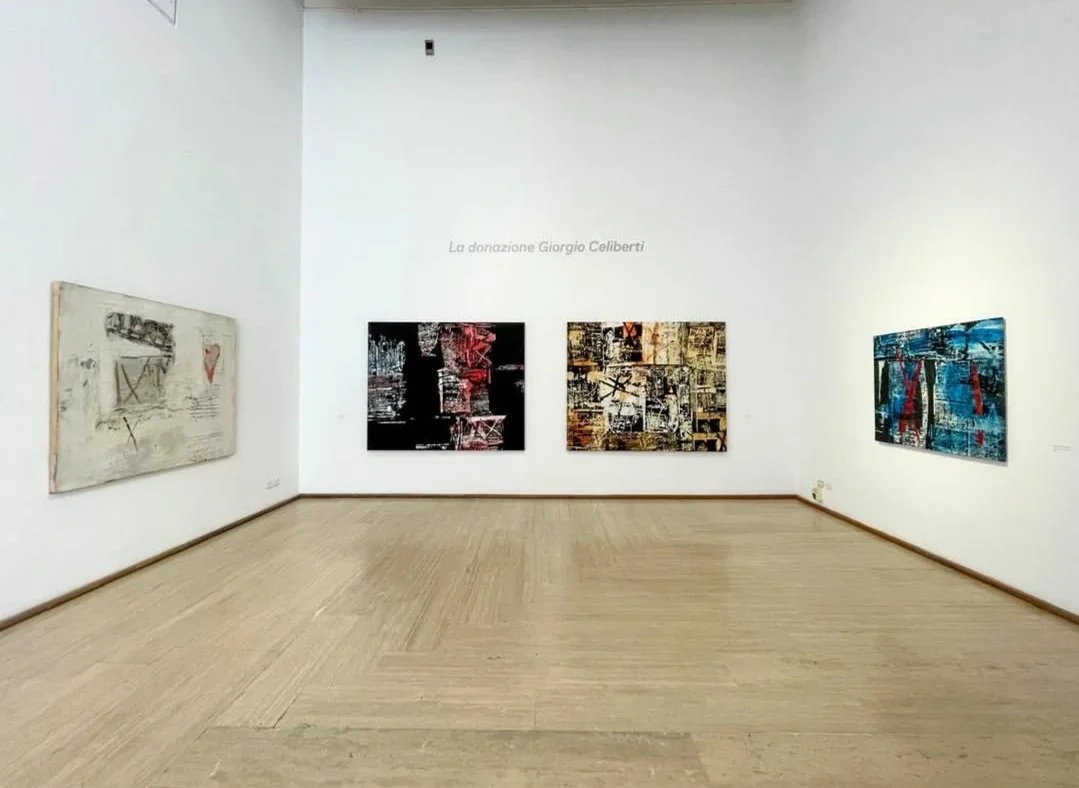
Installation view of Giorgio Celiberti. Dalla Biennale del '48 ad oggi at the National Gallery of Modern and Contemporary Art in Rome. The exhibition rereads more than seventy years of artistic practice within a broader historical and institutional framework.
In recent years, a particular pattern has become increasingly visible in the Italian art world. At first, it may seem like a season of belated honours: major exhibitions devoted to very elderly artists, broad retrospectives, substantial catalogues, museum reinstallations, and historical surveys. On the surface, these projects appear to be the way museums, foundations, and collections accompany certain careers toward a final public consecration.
Yet the matter is more intricate. Giorgio Celiberti, Valerio Adami, and Mario Ceroli never truly vanished from view. They continued to exhibit, publish, and circulate within galleries, foundations, collections, and specialist networks. Their works remained present; their reputations held; their biographies retained a visible continuity. For a long time, however, that presence assumed the quieter form of stewardship: careers preserved, maintained, and kept in circulation, rather than truly re-examined.
They were not absent. They were managed.
Today, that condition is changing. Institutions are returning to these figures because they appear to offer something the accelerated present increasingly struggles to produce: depth, continuity, and historical duration.
In the case of Giorgio Celiberti, the exhibition Dalla Biennale del ’48 ad oggi at the National Gallery of Modern and Contemporary Art exceeds the familiar retrospective format. It draws a historical line through postwar Italy, European memory, the long duration of painting, and the relationship between matter and trauma. Celiberti’s surfaces, marked by incisions, abrasions, and almost fossil-like traces of memory, become newly readable in a moment that is once again asking how images survive, and whether time can still be held inside matter.
The donation of Dissociazione to the GNAM’s permanent collection makes the significance of this operation still clearer.
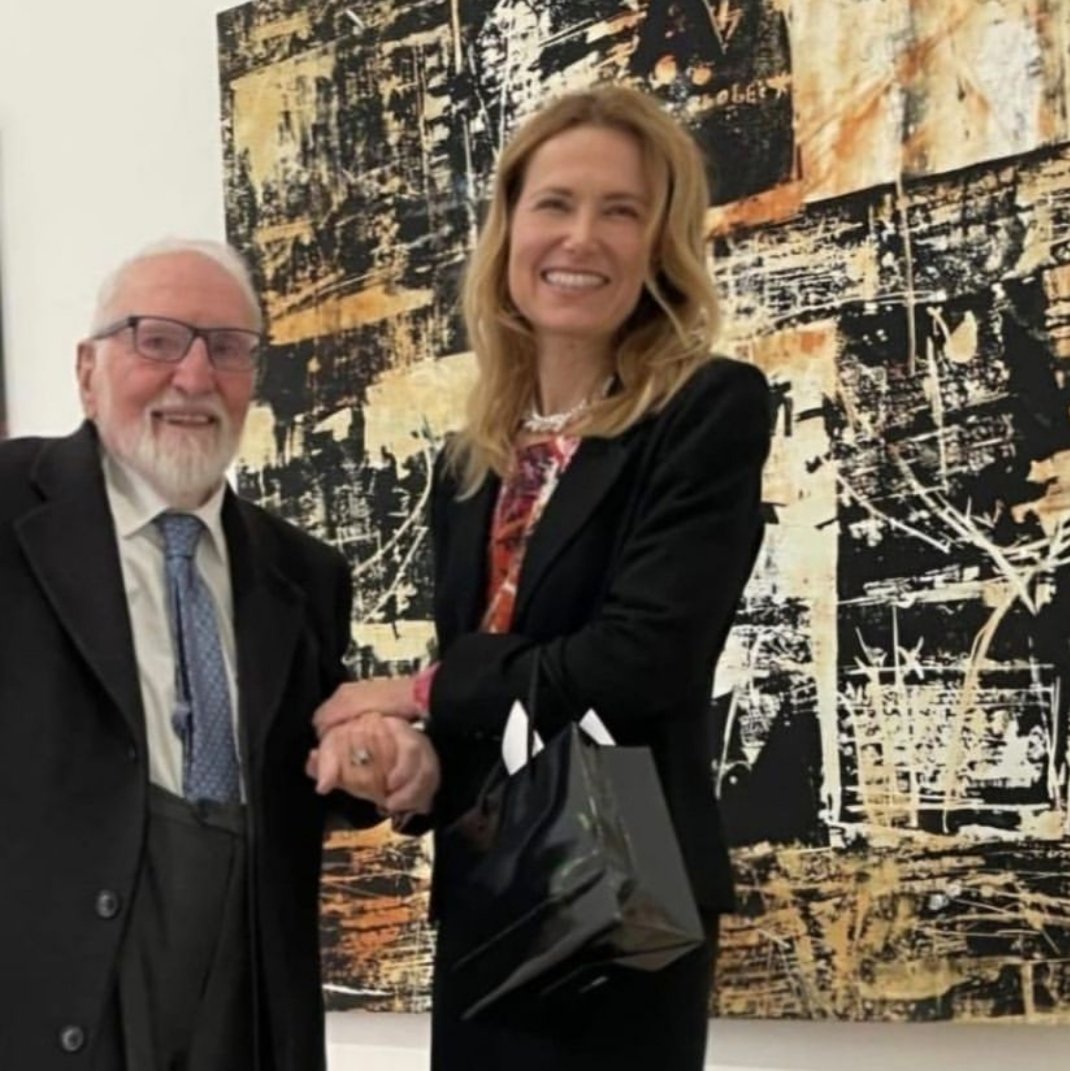
Giorgio Celiberti on the occasion of the donation of Dissociazione to the permanent collection of the National Gallery of Modern and Contemporary Art. The work’s entry into the museum’s holdings extends the significance of the exhibition and publicy reinforces the artist’s long-term trajectory.
The museum is not simply exhibiting the work; it is drawing it into its own patrimony. The exhibition thus becomes part of a larger act of incorporation, publicly reinforcing the artist’s entire trajectory.
With Valerio Adami, the question assumes another shape. His painting offers not only an immediately recognizable visual language, but an image understood as an intellectual field. Literature, philosophy, European memory, figuration, and narrative coexist within a practice that continues to treat painting as a form of thought. The major retrospective at Palazzo Reale repositions Adami’s already historicized career within a broader cultural narrative, supported in part by the systematic work of the Valerio Adami Archive.
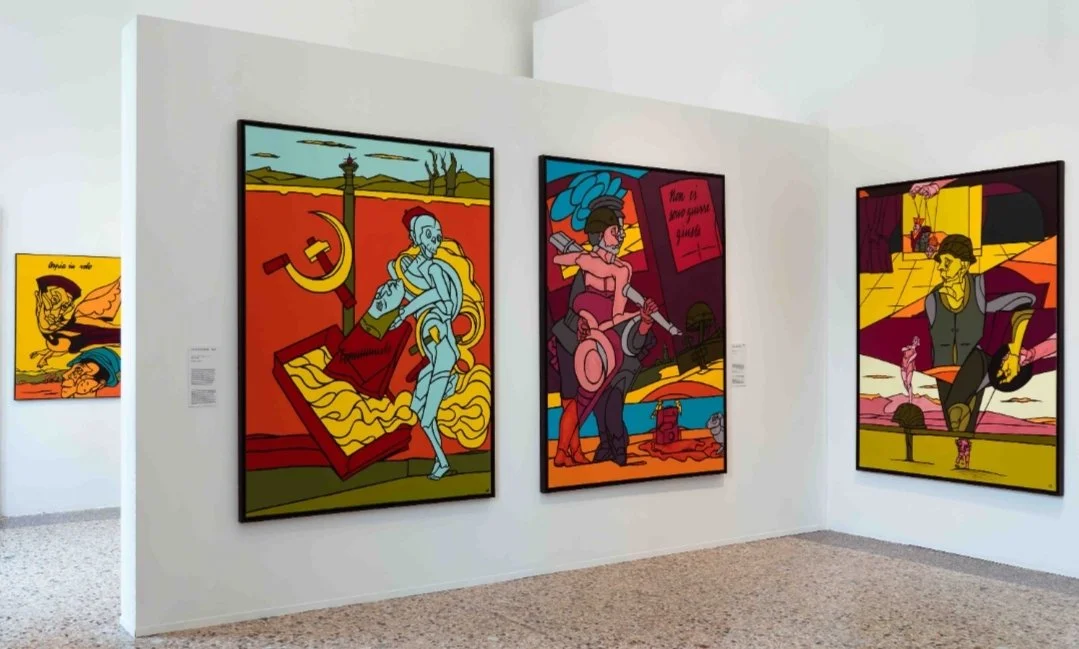
Installation view of Valerio Adami. Pittore di idee at Palazzo Reale. The exhibition surveys more than sixty years of artistic practice, bringing renewed attention to a body of work shaped by the relationship between image, thought, and cultural memory.
Here, the archive does more than preserve documents.
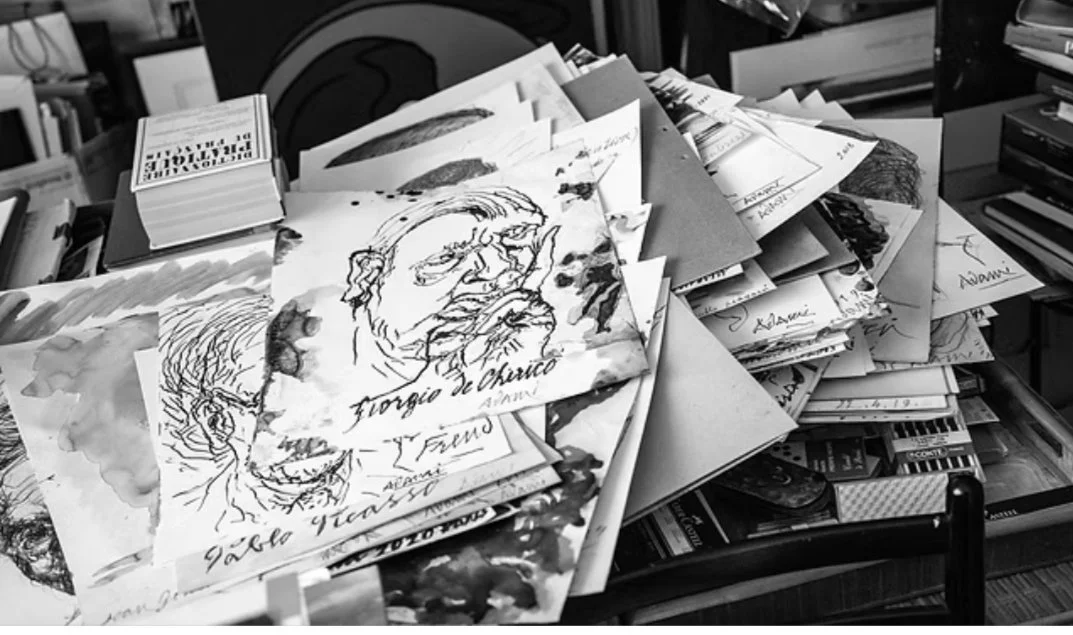
The Valerio Adami Archive preserves, organizes, and makes accessible the documentation of the artist’s work. Catalogues, photographs, correspondence, and exhibition records from the infrastructure that supports its historical and institutional legibility.
It orders, connects, and makes an artistic trajectory available again to museums, the market, critics, and collectors. The retrospective does not create relevance out of nothing. It reactivates a significance already accumulated over time, making it newly legible under changed historical conditions.
Mario Ceroli introduces a further dimension. In his work, sculpture, theatre, space, and environment combine to produce an artistic identity that remains powerfully recognizable. Ceroli Totale at the GNAM moves beyond the logic of tribute and enters a wider framework supported by Banca Ifis, where museum practice, heritage, and corporate collecting converge in the construction of a stable cultural narrative. Ceroli is thus repositioned as an artist capable of crossing languages without dissolving into the disciplinary fragmentation of the recent contemporary.
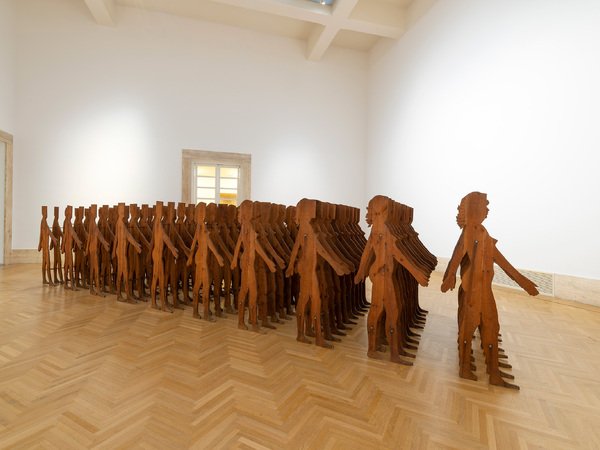
Installation view of Ceroli Totale at the National Gallery of Modern and Contemporary Art in Rome. The exhibition restores the environmental and theatrical dimension of Mario Ceroli’s practice, rereading it within a long- term institutional perspective.
Perhaps this is where the phenomenon becomes most revealing. These long careers offer the art world something that contemporary culture often struggles to secure: figures that remain identifiable over time. Celiberti remains bound to matter and memory; Adami to line and the intellectual construction of the image; Ceroli to space, theatre, and the idea of the total artist. These practices are still defined enough to be organized, narrated, archived, and historicized.
Legibility therefore becomes not only a critical quality, but a form of cultural stability. In a global environment saturated with hybrid practices, accelerated careers, and constantly shifting artistic identities, the long-lived artist begins to function almost as a semiotic safe haven: not a promise of the future, but a guarantee that the past can still be ordered, interpreted, and returned to the present.
A comparable dynamic can be observed beyond Italy, though through different mechanisms. Yayoi Kusama, Marina Abramović, Barbara Kruger, and Joan Jonas show how the long duration of the living artist has become a central resource within the international art system.
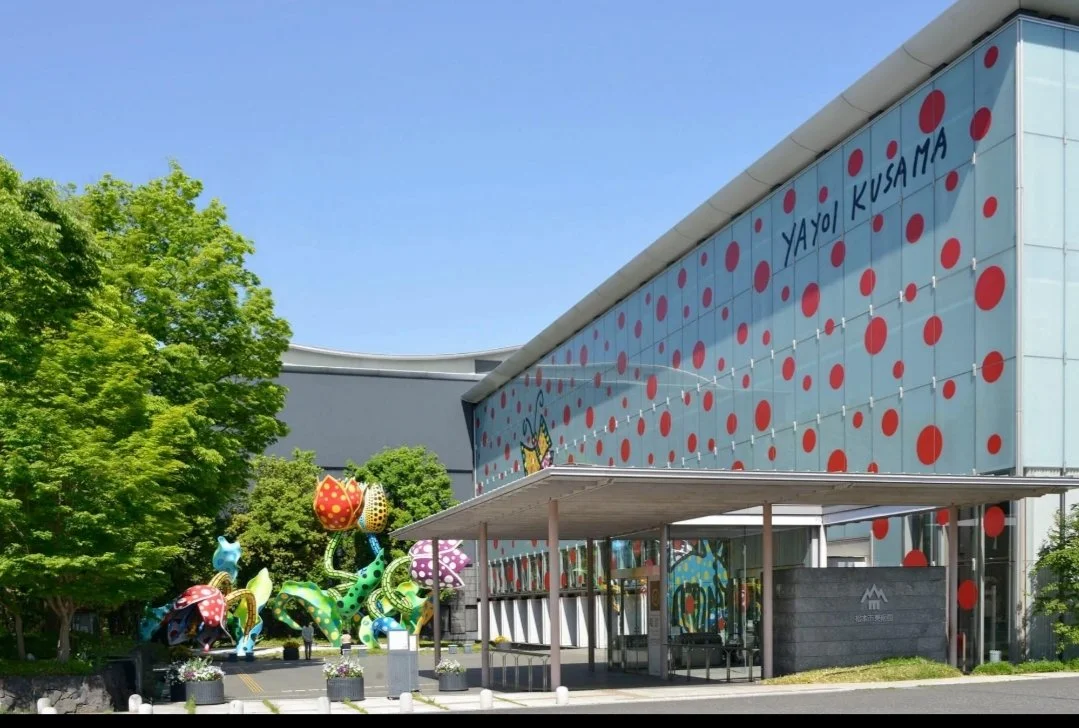
The Yayoi Kusama Museum in Tokyo reflects how the long duration of the living artists can become a stable presence within the international museum system. A career thus becomes a cultural, institutional, and economic resource on a global scale.
In these cases, repositioning is often sustained by mega-galleries, foundations, studio-management structures, and the global market. The Italian case retains a slower, more patrimonial profile, more closely tied to public museums, archives, permanent collections, and institutional recognition.
Within this process, the archive plays a decisive role. To digitize, catalogue, and organize provenance records, exhibition histories, bibliographies, and photographic documentation is to make a career institutionally usable. Contemporary musealization increasingly depends on this silent infrastructure. Without archives capable of stabilizing documentation, many works would continue to exist in a zone of recognition too fragile to be fully incorporated by museums or by the market.
The question, then, is structural rather than celebratory. For at least two decades, contemporary art has built much of its prestige on speed: new artists, new fairs, new urgencies, new visual identities. Yet a cultural field founded almost exclusively on the continuous production of the new tends, over time, to consume part of its own historical depth.
In this context, the elderly artist acquires a different function. He or she comes to embody the past as a credible form of continuity. Institutions turn to these figures not only for important works, but for trajectories that have crossed decades without being fully dissolved by the rapid consumption of cultural seasons.
This movement, however, carries its own ambiguity. As these careers are brought back to the centre, they are also stabilized. Museums order them, archives certify them, and the market reinforces their position. Part of their irregularity and opacity is thus absorbed into a more compact historical narrative.
A more delicate question remains. Does this economy of duration restore depth to the artistic field, or does it reduce its appetite for risk? Returning to senior artists allows institutions to work on firmer ground, less exposed to the volatility of the new. At the same time, this tendency may draw attention and resources away from younger careers still lacking consolidated archives, museum legitimation, and critical stabilization.
Italian contemporary art therefore seems to be seeking, within these careers, a temporal depth capable of giving form to the present. Age alone does not guarantee value, and every late retrospective produces different results. In certain bodies of work, however, there remains a capacity for endurance that the art field now recognizes as particularly necessary.
Martina Gecchelin